Return-to-base work
These boats are not asked to vanish over the horizon. They run a duty, come home, and charge. That is where electric earns its keep.
The market
Two platforms. Two kinds of operator. Inshore days on the 9m, crew transfer on the 10–12m — both specified around a job, a route, and a quay to charge at.
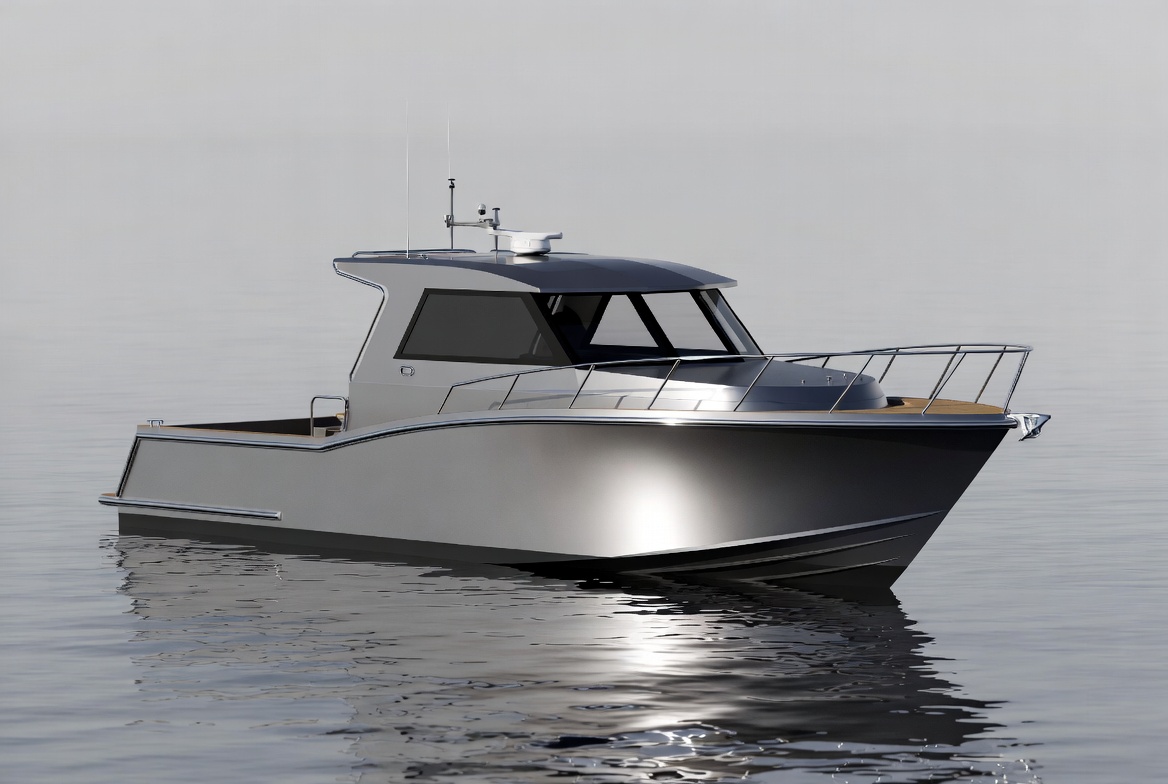
9 metres/Inshore work
Skippers, harbours, survey and science teams, coastal operators.
Fishing and inshore days, harbour and port movements, hydrographic and seabed survey, environmental monitoring, Marine Mammal Observer work, guard and patrol, selected leisure.
A working day that starts and ends at a berth, with charging on the quay.
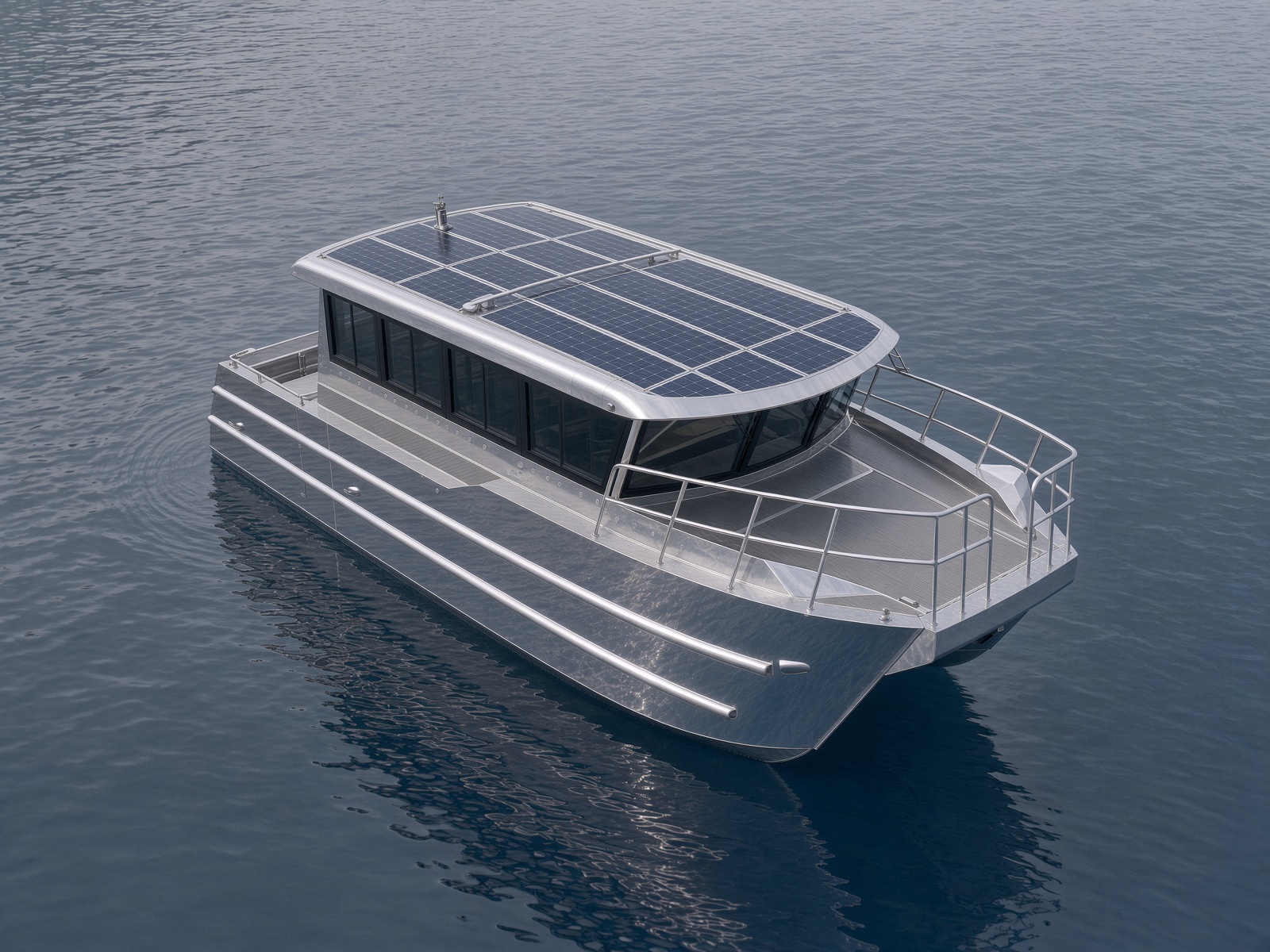
10–12 metres/Offshore wind
O&M operators, wind-farm support, coastal crew bases.
Crew transfer, inspection and maintenance support, and guard duties from established harbours — people movement on short, known routes.
The same run, most days, back to a charged pontoon. Compact CTV work, not a 24-metre North Sea hull.
Why electric here
These boats are not asked to vanish over the horizon. They run a duty, come home, and charge. That is where electric earns its keep.
No tank-to-wake NOx, SOx or particulates, and less noise on the quay — the difference around harbours, residential waterfronts and fishing marks.
UK offshore wind is scaling fast. The boats that serve it still leave from coastal bases. We build the small end of that fleet, on the Tyne.
The backdrop
43–50 GW
UK offshore wind targeted by 2030, from 14.8 GW in 2024.
8.4 GW
Awarded in the January 2026 offshore wind auction — c. £22bn of private investment.
2,000+
CTVs forecast globally for that growth, with 400+ SOVs alongside.
£448M
UK Government clean-maritime innovation funding, 2026–2030.